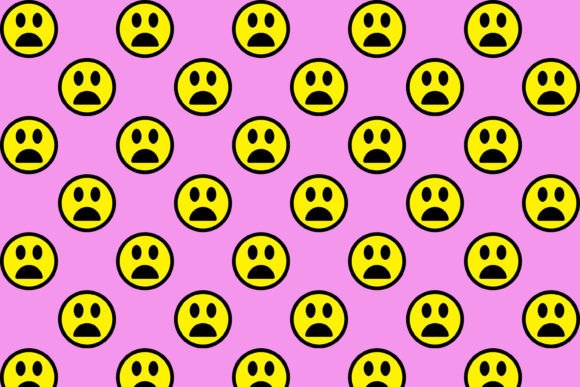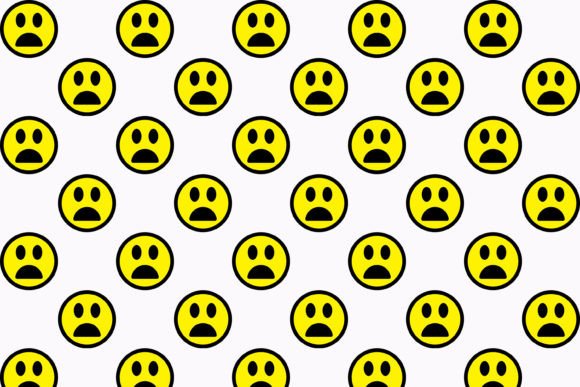
White Digital Paper with Emoji Patterns
A White Digital Paper with Emoji Patterns is more than a decorative background—it’s a precision-crafted, high-resolution planning and communication asset designed for intentionality. At 3000 × 2000 pixels (31.25 × 20.83 inches or 794 × 529 mm), rendered at 300 PPI using the standard conversion scale (1 inch = 96 px, 1 mm ≈ 3.779 px), this JPEG file delivers crisp, print-ready clarity without reliance on vector software or subscription tools. Built in Adobe Photoshop using exclusively copyright-free resources, it’s ready for immediate download and ethical reuse—no attribution required, no licensing friction.
Why This Format Matters Strategically
Most digital paper assets fall into two categories: overly minimal (blank white) or visually overwhelming (dense textures, watermarks, branding). The White Digital Paper with Emoji Patterns occupies a deliberate middle ground—clean enough to support focus, expressive enough to invite interpretation and structure. Emojis here aren’t frivolous decoration; they’re lightweight visual anchors. A ✅ signals completion. A 📌 marks priority. A 🔄 suggests iteration. A 🧭 implies direction. These symbols operate at the edge of cognition—recognizable but not distracting—making them ideal for visual thinkers who need scaffolding, not instruction.
This isn’t about “making things pretty.” It’s about reducing cognitive load when organizing ideas, mapping workflows, or preparing client-facing deliverables. When your goal is clarity—not novelty—the White Digital Paper with Emoji Patterns supports that goal by offering consistent spatial grammar. You decide what each emoji means in your context. That agency matters: it transforms a static file into a flexible thinking tool.
When to Use It—And When Not To
Use the White Digital Paper with Emoji Patterns when you need:
- Goal framing: Sketching quarterly OKRs on a single canvas, assigning emojis to objectives (🎯 for targets, ⏳ for timelines, 📊 for metrics).
- Workshop facilitation: Printing or projecting the sheet during collaborative sessions—participants annotate directly, using the embedded patterns as intuitive reference points.
- Client briefing documents: Embedding it behind bullet points or timelines in presentations to add subtle visual rhythm without competing with content.
- Learning scaffolds: Educators layering lesson plans onto the grid, using 📘 for resources, 🧩 for activities, and 💡 for reflection prompts.
- Brand-aligned ideation: Freelancers or agencies using it as a base layer before adding custom typography or brand colors—keeping structure neutral while allowing voice to emerge.
Avoid it when:
- You require strict accessibility compliance for screen readers (emojis alone lack semantic meaning without accompanying text); always pair with descriptive labels in final outputs.
- Your workflow depends on dynamic editing (e.g., moving elements freely)—this is a static JPEG, not a layered PSD or editable template.
- You’re designing for formal publishing where emoji usage conflicts with tone or audience expectations (e.g., legal contracts, academic journals).
How to Approach It Intentionally
Start with purpose—not aesthetics. Before opening the file, ask: What outcome am I trying to shape? If the answer is “I want to clarify my Q3 marketing funnel,” then assign meaning to three to five emojis before placing anything on the canvas. For example:
- 🎯 = Top-of-funnel awareness goal
- 🔍 = Mid-funnel engagement metric
- 💬 = Customer touchpoint requiring refinement
- 📈 = KPI threshold needing validation
- 🔄 = Process step due for automation
This pre-assignment prevents random emoji placement—a common pitfall that turns the White Digital Paper with Emoji Patterns into visual noise. Think of the emojis as placeholders for decisions, not substitutes for them.
Also consider scale. Because the dimensions support both print and digital use, adjust your approach accordingly:
- For print: Use at full size (794 × 529 mm) on large-format printers for wall-mounted strategy maps—or scale down to A3 (297 × 420 mm) for team huddles.
- For digital: Import into tools like Notion, Figma, or PowerPoint as a background layer. Lock it, then overlay text boxes, arrows, or icons. Its 300 PPI resolution ensures fidelity even when zoomed.
Risks of Using It Without Context
The biggest risk isn’t technical—it’s strategic drift. Without anchoring emojis to specific outcomes, the White Digital Paper with Emoji Patterns becomes a decorative prop rather than a decision-making aid. You might spend 20 minutes arranging 🌟, 📋, and 🚀 across the canvas—and walk away feeling productive, yet no clearer on next steps.
Another under-discussed risk is misalignment with audience perception. An emoji that signals “innovation” to you (💡) may read as “casual” or “unprofessional” to a conservative client. Test early: share a draft using the White Digital Paper with Emoji Patterns with one trusted stakeholder and ask, “What do you assume this represents?” If their interpretation diverges from your intent, revise the mapping—not the design.
Long-Term Value Beyond the First Download
Over time, the White Digital Paper with Emoji Patterns gains value through repetition and refinement. Keep a log: note which emoji combinations consistently help you clarify priorities, which ones confuse your team, and which ones fade from use because they no longer reflect your operational reality. That feedback loop turns a static file into a living artifact—one that evolves alongside your thinking.
It also builds consistency across projects. When your team uses the same base canvas for sprint planning, content calendars, and customer journey mapping, patterns begin to emerge—not just visually, but behaviorally. People start anticipating where certain information lives. That predictability reduces ramp-up time and improves cross-functional alignment.
Importantly, its copyright-free foundation means you can adapt it without legal hesitation. Overlay your logo. Add a subtle watermark for internal use. Convert sections to grayscale for accessibility testing. None of those actions compromise integrity—because the original asset was built for reuse, not restriction.
Practical Planning Tips You Can Apply Today
- Start small: Print one copy. Use it for a single 30-minute planning session—no prep, no agenda beyond “What’s due in the next 7 days?” Let the emojis guide your grouping, not your judgment.
- Rotate meaning deliberately: Every quarter, reassign one emoji to reflect shifting priorities. If 📈 previously meant “revenue growth,” shift it to “customer retention rate” if that’s now the strategic lever.
- Pair with constraints: Limit yourself to four emojis per session. Fewer options force sharper distinctions—and reveal assumptions you hadn’t named.
- Archive iterations: Save dated versions (e.g., “Q2-2024-Product-Roadmap-EmojiMap.jpg”). Over months, these become diagnostic tools—showing how your emphasis, language, and structure have evolved.
A Final Strategic Observation
Digital tools multiply choice. Templates multiply speed. But clarity multiplies impact—and that only emerges when structure serves substance. The White Digital Paper with Emoji Patterns doesn’t promise transformation. It offers something quieter, and more durable: a consistent surface on which to test assumptions, align teams, and make decisions visible before they’re finalized. Used thoughtfully, it becomes less of a “paper” and more of a practice—one that rewards patience, reflection, and precision over speed or spectacle.