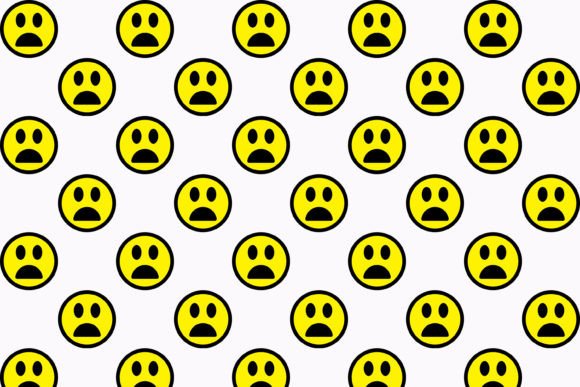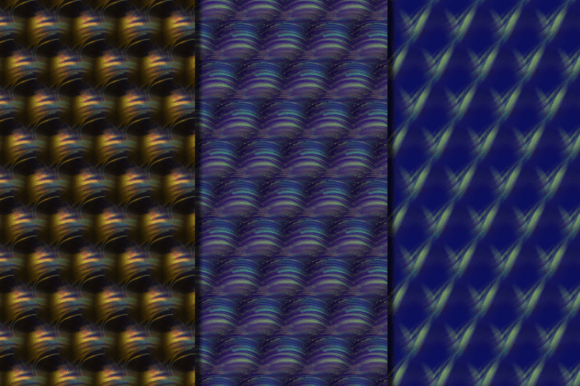
Various Shape Digital Paper Patterns
If you’ve ever spent hours searching for just the right background—something that feels fresh but not overwhelming, structured but not rigid—you know how much time and energy goes into finding design elements that truly support your vision. That’s where Various Shape Digital Paper Patterns comes in: a thoughtfully curated collection of 10 high-resolution JPEG files, each built around intentional geometric variety—circles, triangles, hexagons, overlapping polygons, asymmetrical grids, and more—all designed to work across digital and print mediums without compromising clarity or visual impact.
Why shape variety matters more than you think
Many creators assume “pattern” means repeating motifs in predictable rows or symmetrical layouts—and while those have their place, real-world design projects often demand flexibility. A stationery set might need subtle texture behind hand-lettered quotes; gift wrap benefits from rhythm *and* surprise; textile mockups require seamless tiling *and* enough visual breathing room to showcase product details. The 10 designs in this collection intentionally vary aspect ratios—including four 4:3, three 3:2, and one 1:1 format—so they adapt naturally to Instagram posts, printable planners, fabric repeats, or wall art layouts without awkward cropping or forced scaling.
A common mistake: treating all digital paper patterns as interchangeable
It’s easy to download a bundle labeled “geometric backgrounds” and assume every file will behave the same way. But resolution, color mode, edge handling, and even embedded metadata affect how well a pattern performs. Some low-res JPEGs pixelate when scaled for large-format prints. Others use RGB profiles that shift unpredictably when converted to CMYK for professional printing. And many “seamless” patterns aren’t actually tile-ready—leaving visible seams or misaligned edges when repeated across fabric or wallpaper.
This collection avoids those pitfalls. Every file is delivered at true high resolution (minimum 300 DPI at standard print sizes), uses sRGB color space for consistent on-screen previewing, and has been manually tested for clean tiling where applicable. No guesswork. No last-minute resizing before a client deadline.
Another oversight: ignoring ratio compatibility with your workflow
Let’s say you’re designing social media templates for a small business client. You pick a bold triangular pattern—but it’s saved at 1:1 (square) while their brand guidelines require 9:16 vertical Reels covers. Stretching it distorts angles. Cropping it loses key visual balance. Suddenly, what looked dynamic on your desktop becomes visually unstable in motion.
The mix of 4:3, 3:2, and 1:1 ratios here isn’t arbitrary. It reflects real usage: 4:3 works reliably for presentation slides and printable PDFs; 3:2 matches common photo print sizes and digital ad banners; 1:1 gives centered focus for logos, icons, or minimalist branding. Before downloading or purchasing any digital paper pattern set, ask yourself: What are my top three output formats this month? Then verify whether the files match—not just in theme, but in proportion and scalability.
What to check before using Various Shape Digital Paper Patterns
- Resolution & intended use: These files are optimized for both screen and print—but if you plan to scale beyond 24×36 inches, open one in Photoshop or Affinity Photo first and zoom to 100%. Look for softness or aliasing along sharp edges. This set holds crispness up to poster size, but always test with your specific printer or platform.
- Color fidelity: Preview files on multiple devices—not just your calibrated monitor. If you’re designing packaging or merch, soft-proof in CMYK mode early. While these patterns use sRGB for broad compatibility, subtle gradients may shift slightly in print. Consider saving a test swatch before committing to full production runs.
- Licensing scope: These are for personal and commercial use—including client work, small-batch products, and digital courses—but not for reselling as standalone assets or embedding in editable template marketplaces without permission. Always review the included license terms, even if they seem familiar.
Better choices start with intention—not just aesthetics
One designer we worked with chose a “busy” polka-dot pattern for her yoga studio’s welcome cards—only to realize later that the tight spacing made QR codes nearly unreadable when printed at 2×3 inches. She switched to a looser, off-grid circle layout from this collection. Same concept. Better function.
That’s the quiet power of Various Shape Digital Paper Patterns: it doesn’t just offer decoration—it offers decision support. Each shape was selected not for trendiness, but for how it interacts with typography, negative space, and human perception. Hexagons suggest structure without rigidity. Asymmetrical triangles add movement without chaos. Overlapping ovals create depth without clutter.
How to integrate them without overcomplicating your process
You don’t need advanced software to get value. In Canva, upload a JPEG and use it as a background layer—then adjust transparency to let text or photos shine through. In Illustrator, place it as a linked image and use clipping masks to fit shapes precisely within logos or badges. For physical products like greeting cards or fabric, import into your print-on-demand dashboard at native resolution—no upsampling needed.
And if you're teaching a workshop or building a resource library for students? These patterns work beautifully as low-stakes starting points. Beginners can learn about contrast, alignment, and hierarchy by layering simple text over varying densities of shape repetition. No pressure to “make something perfect”—just explore how form supports message.
Final note: Quality isn’t just about pixels
What makes this collection stand out isn’t just technical precision—it’s curation with context. These aren’t 10 random shapes thrown together. They’re 10 distinct visual voices, each with its own rhythm, weight, and spatial logic. One might anchor a corporate report with grounded geometry; another adds playful energy to a children’s activity sheet. Used deliberately, they help your work communicate more clearly—not louder.
So before you reach for the next trending background pack, pause and ask: Does it serve the project—or just fill space? With Various Shape Digital Paper Patterns, the answer is built in.