Little Boy Washi Tapes Patterns: A Practical Creative Resource for Thoughtful Designers
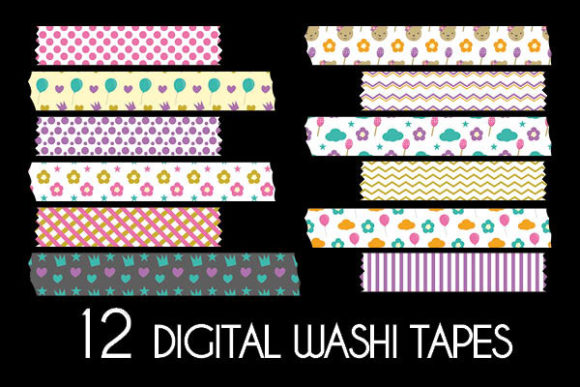
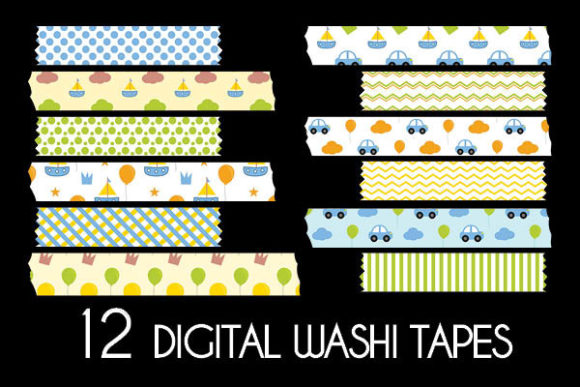
Washi tape remains one of the most quietly versatile tools in the creative toolkit — not flashy, but consistently functional. Among the many thematic collections available, Little Boy Washi Tapes Patterns stands out for its focused aesthetic, consistent execution, and broad applicability across both personal and professional projects. This set includes 12 distinct tapes, each featuring thoughtful, age-appropriate motifs — think trucks, dinosaurs, rockets, building blocks, soccer balls, and subtle geometric interpretations of childhood play — rendered in cohesive color palettes and balanced scale.
What Makes These Patterns Distinctive — Beyond the Theme
Unlike novelty tapes that prioritize whimsy over utility, this collection prioritizes usability without sacrificing charm. Each of the 12 Little Boy Washi Tapes is printed on high-grade washi paper with a medium-tack acrylic adhesive — strong enough to hold securely on matte cardstock, kraft paper, or glass jars, yet gentle enough to remove cleanly from most smooth surfaces without residue. The patterns repeat evenly, with no visible misalignment or ink bleeding at the edges — a detail that matters when layering or aligning strips precisely on recipe cards or product labels.
The color consistency across the set is notable: muted navy, forest green, warm terracotta, and soft grey appear repeatedly, allowing combinations to harmonize without forced matching. That predictability supports visual cohesion in branding-adjacent work — for example, an educator designing classroom reward charts or a small-batch food producer labeling jam jars can use multiple tapes from the set while maintaining a unified look.
Real-World Use Cases — Where These Tapes Deliver Tangible Value
In practice, the strength of Little Boy Washi Tapes Patterns lies in its adaptability across contexts where aesthetics meet function:
- Small business packaging: A handmade soap maker uses the rocket and dinosaur tapes to seal kraft gift boxes — adding personality without compromising professionalism. The tapes adhere reliably to textured paper and stay put during shipping.
- Educational materials: A preschool teacher labels sensory bins and learning centers with the block and train patterns. The contrast between pattern and background ensures legibility, and the removable adhesive allows for seasonal rotation without damaging laminated signs.
- Digital-adjacent analog workflows: Freelance designers and content creators use these tapes to mark physical editorial calendars, annotate printed client briefs, or highlight deadlines on whiteboard-style planning sheets — the low-tack nature prevents ghosting on dry-erase surfaces.
- Recipe and journaling systems: Home cooks apply the soccer ball or bicycle pattern to index tabs on spiral-bound cookbooks; the thin profile doesn’t interfere with page turning, and the matte finish reduces glare under kitchen lighting.
Quality and Consistency Across the Set
All 12 Little Boy Washi Tapes measure 15 mm wide and approximately 10 meters long — a practical length that balances usability with storage efficiency. The paper base is slightly textured (not glossy), which improves ink adhesion if writing directly on the tape with fine-tip pens or markers. We tested handwriting legibility across five tapes using both pigment and gel inks: all retained crispness without feathering. No tape showed curling at the edges after extended time on a roll — a common issue with lower-grade washi that affects precision application.
That said, performance does vary slightly by surface. On highly glossy coated stock (e.g., some premium greeting cards), adhesion is reduced — best used as decorative accents rather than structural seals. Similarly, prolonged exposure to direct sunlight may cause subtle fading over several months; this isn’t unique to this set but worth noting for outdoor-facing applications like garden marker tags.
Who Benefits Most — And Why It Fits Specific Workflows
This collection serves professionals and serious hobbyists who value intentionality over abundance. Educators preparing classroom environments benefit from the thematic clarity and durability — no need to sift through dozens of unrelated patterns to find age-resonant visuals. Small business owners in children’s products, early education, or family-oriented services find immediate alignment with brand voice: the patterns feel inclusive, grounded, and subtly gender-neutral despite the “little boy” framing — avoiding stereotypes while retaining recognizability.
Freelancers managing multiple client projects appreciate the set’s restrained palette and repeatable scale. When designing print collateral for a pediatric clinic or a summer camp brochure, having 12 coordinated tapes means less time sourcing assets and more time refining layout or messaging. Likewise, content creators documenting analog workflows — such as bullet journaling or habit tracking — gain visual rhythm without visual noise.
Limits to Acknowledge — Not Flaws, But Contextual Boundaries
This isn’t a “one-size-fits-all” decorative solution. If your work demands ultra-bold graphics, metallic finishes, or UV-resistant permanence, other tape categories may be more appropriate. The patterns are intentionally understated — effective for subtle emphasis, less so for high-contrast signage. Also, while the set includes variety, it doesn’t span developmental stages: motifs skew toward ages 3–8, making it less relevant for teen-focused or multi-age educational contexts without adaptation.
Integrating Into Existing Systems — Practical Recommendations
For best results, store the rolls upright in a shallow drawer or on a labeled pegboard — humidity and pressure can affect adhesive integrity over time. When applying to curved surfaces like mason jar lids, gently stretch the tape as you press to avoid bubbling. For layered effects (e.g., overlapping strips on a greeting card), apply the base layer first, allow 30 seconds for initial tack to set, then add secondary layers — this minimizes shifting.
If you’re evaluating whether Little Boy Washi Tapes Patterns fits your needs, consider your most frequent analog touchpoints: Do you regularly label, organize, present, or personalize physical items? Are visual cues part of how your audience processes information? Does your workflow involve repeated, small-scale design decisions where consistency saves time? If yes, this set functions less like a craft supply and more like a calibrated design tool — predictable, reusable, and quietly effective.
Ultimately, what makes these 12 Little Boy Washi Tapes valuable isn’t novelty, but reliability paired with quiet intention. They don’t shout — they support. And in creative work, especially under deadline or across multiple stakeholders, that kind of dependable utility often matters more than flash.