Hand-Drawn Papaya Fruit Seamless Patterns: A Versatile Vector Resource for Designers and Creatives
What Are Papaya Fruit Seamless Patterns?
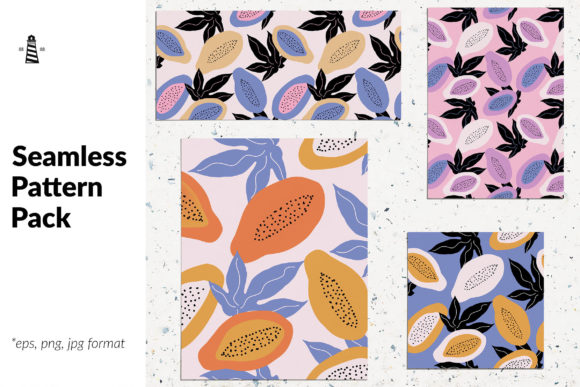
Seamless patterns are digital design elements that tile infinitely—without visible seams or breaks—creating a continuous, repeating surface. When crafted with hand-drawn papaya fruits, these patterns combine botanical charm with artisanal authenticity. Unlike generic clipart or AI-generated motifs, hand-drawn papaya patterns feature organic linework, subtle texture variations, and natural imperfections that evoke warmth, freshness, and tropical vitality. Each fruit is carefully illustrated to reflect real-world characteristics: the dimpled skin, curved seeds, vibrant orange flesh tones, and leafy green calyx—all rendered in vector precision.
Why Choose Hand-Drawn Over Digital or Stock Alternatives?
Many designers assume “seamless” automatically means “machine-made”—but that’s a common misconception. While algorithmic tiling tools can generate repetition quickly, they often lack narrative depth and tactile nuance. Hand-drawn papaya patterns bridge the gap between human expression and technical utility. The illustrator’s deliberate choices—how a stem curls, how light catches a papaya’s curve, how seeds scatter organically—add storytelling value that resonates emotionally with viewers.
This distinction matters especially in branding, packaging, and lifestyle design, where authenticity builds trust. A juice label featuring a hand-drawn papaya pattern feels more genuine—and more memorable—than one using a sterile, symmetrical stock motif. It signals care, intention, and connection to nature.
Inside the Pattern Pack: What You’ll Receive
This premium collection delivers 100% vector-based, high-resolution papaya fruit seamless patterns, thoughtfully organized for immediate usability across creative workflows. Here's exactly what’s included:
- 8 EPS files — Industry-standard, editable vector formats compatible with virtually all design software (Illustrator, CorelDRAW, Affinity Designer, InDesign).
- 8 Adobe Illustrator (.ai) files — Fully layered, named artboards with editable paths, swatches, and pattern swatches pre-loaded for one-click application.
- 8 PNG files — Transparent-background raster versions at 12 × 12 inches, 300 dpi, ideal for mockups, web overlays, or print-ready composites where vector support isn’t available.
- 8 JPG images — High-fidelity, color-accurate previews at the same dimensions and resolution—perfect for client presentations, mood boards, or social media teasers.
All patterns are built on a non-repeating base tile, meaning each of the eight designs offers unique rhythm, density, and composition—from tightly clustered slices to airy arrangements with trailing vines and leaves. No two tiles feel redundant; instead, they form a cohesive yet diverse visual library.
How These Patterns Fit Into Real-World Creative Work
Whether you're a freelance graphic designer, product developer, educator, or small-business owner, hand-drawn papaya patterns serve practical, scalable purposes:
Product Packaging & Label Design
Imagine a line of cold-pressed papaya enzyme cleansers or tropical kombucha—their labels instantly communicate flavor, origin, and wellness ethos when wrapped in an organic, hand-crafted pattern. Because each file is vector-based and print-ready at 300 dpi, you can scale the pattern from a 2-inch bottle sticker to a 48-inch retail display without pixelation or loss of fidelity.
Digital & Web Applications
Use the transparent PNGs as subtle website backgrounds for food blogs, nutrition coaches, or eco-conscious brands. Pair them with clean sans-serif typography to create contrast between modern interface and natural motif. Developers can integrate SVG exports (easily derived from EPS/AI files) for responsive, lightweight web graphics.
Fashion & Textile Design
Surface pattern designers use seamless repeats daily—and this pack meets textile industry standards. Apply the patterns to scarves, tote bags, or children’s apparel using repeat swatches in Illustrator or dedicated textile software like Kaledo. The 12×12 inch tile size aligns with standard fabric printing grids used by services like Spoonflower or Printful.
Educational & Editorial Use
Teachers creating plant biology worksheets, nutrition curriculum materials, or healthy-eating posters benefit from scientifically accurate yet engaging visuals. These papayas aren’t cartoonish—they’re botanically informed, making them suitable for classroom use without sacrificing aesthetic appeal.
Technical Excellence Meets Creative Flexibility
Each of the 100 vector art elements inside the eight patterns was individually drawn—not traced or auto-traced. That means every curve is mathematically smooth (using Bézier handles), every color is defined in CMYK and RGB-safe palettes, and every layer is logically grouped and labeled. This attention to technical detail ensures compatibility with both commercial printers and digital platforms.
For example: Need to recolor the entire pattern to match your brand’s coral-and-teal palette? Just select the global swatch and update once—the change propagates across all instances. Want to isolate a single papaya slice for a logo icon? Unlock layers and copy the object directly. No raster degradation. No guesswork.
Common Misconceptions—Clarified
- “Seamless = boring.” Not true. Seamlessness refers only to tiling behavior—not visual interest. These patterns use asymmetrical balance, overlapping elements, and varied fruit orientations to avoid monotony.
- “Vector means low detail.” False. Vectors describe shape mathematically—so intricate details like seed textures, leaf veins, and stippled skin are fully preserved and infinitely scalable.
- “Only for tropical themes.” While naturally fitting for summer campaigns or fruit-based products, these patterns also work beautifully in minimalist contexts—try desaturating to muted ochres and sage greens for Scandinavian interiors or wellness studios.
Who Benefits Most From This Collection?
While anyone can appreciate beautiful design, this pack delivers exceptional ROI for specific audiences:
- Small business owners launching health foods, skincare, or boutique beverages who need professional-grade assets without hiring an illustrator.
- Freelance designers building diverse portfolios and offering clients distinctive, non-generic pattern options.
- Print-on-demand creators uploading to Redbubble, Teespring, or Zazzle—where unique, high-res, transparent-background files outperform generic stock.
- Educators and content creators developing visually rich learning resources grounded in real-world botany and nutrition.
Getting Started: Simple Integration Tips
You don’t need advanced skills to begin using these patterns effectively:
- In Adobe Illustrator: Drag any .ai file into your workspace, then go to Object > Pattern > Make to edit tile spacing or add new elements.
- In Photoshop: Place the PNG as a Smart Object, then apply Layer > Layer Style > Pattern Overlay for textured effects.
- For web: Convert EPS to SVG using Illustrator’s “Export for Screens” feature—then embed inline or as CSS background images.
- Always save backups of original files before editing—especially if adjusting colors or scaling beyond intended use cases.
Final Thoughts: More Than Just Decoration
Hand-drawn papaya fruit seamless patterns represent a thoughtful convergence of nature, craft, and technology. They’re not merely decorative flourishes—they’re communication tools. Each papaya tells a story about growth, nourishment, and sensory delight. By choosing meticulously drawn, technically sound, and ethically produced assets, designers contribute to a broader shift toward meaningful visual culture—one that values human skill alongside digital efficiency.
Whether you’re designing your first juice label or building a full seasonal brand identity, this pattern pack offers both creative inspiration and production-ready reliability. And because it’s rooted in observation—not automation—it invites viewers to pause, recognize the fruit, and connect with something real.