Seamless Hunter Knife Patterns
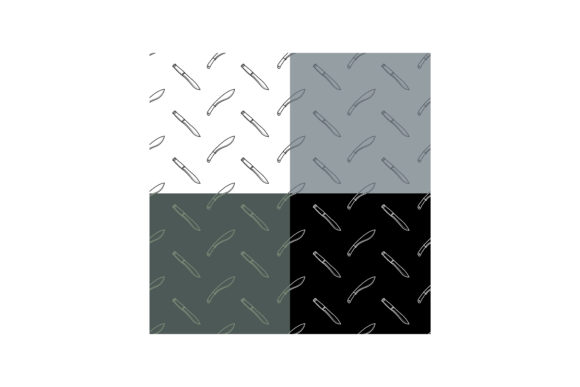
Imagine a collection of clean, repeatable vector designs—each one built around the bold, functional shapes of hunter knives and military blades—but crafted not as isolated icons, but as seamless, tileable patterns. That’s what a Set of Seamless Patterns with Hunter Kni offers: versatile, scalable artwork where knife silhouettes, tactical motifs, and woodland-inspired ornamentation flow edge-to-edge without visible seams or breaks.
What Makes These Patterns Practical—and Purposeful
These aren’t just decorative flourishes. Each pattern is built as a vector graphic—meaning it stays razor-sharp at any size, from a tiny label on outdoor gear to a full-wall mural in a hunting lodge. The motifs blend realism and stylization: think engraved blade profiles, cross-sections of sheaths, compass roses interwoven with knife outlines, or minimalist stag-horn-and-steel arrangements—all arranged to repeat infinitely across fabric, paper, or screen.
Because they’re seamless, you can apply them directly to apparel mockups, textile swatches, or packaging templates without worrying about alignment gaps or awkward cutoffs. No cropping, no tiling guesswork—just drag, scale, and go.
Who Uses These—and Why It Fits Real Needs
A freelance textile designer might use these patterns to develop limited-run hunting apparel for a small outdoor brand. A teacher creating nature-themed classroom materials could print them on banners or student handouts. A small-batch candle maker might emboss the motif onto soy wax labels—or even laser-etch it onto wooden wick trays.
For bloggers covering survival skills or heritage crafts, these patterns add visual cohesion to infographics, social media carousels, or printable checklists. Marketers launching a new line of tactical pens or field notebooks can unify branding across digital ads, product tags, and unboxing inserts—using the same underlying pattern language.
Even hobbyists enjoy them. One customer stitched a subtle knife-repeat motif into a custom rifle sling using heat-transfer vinyl. Another used the vector files to carve a repeating border into a walnut cutting board. The flexibility comes from the format—not just the theme.
Where These Patterns Shine (and Where They Don’t)
They work beautifully on cotton canvas, polyester performance fabric, kraft paper, matte vinyl, and coated cardstock. Because they’re vector-based, they scale cleanly for embroidery digitizing (when simplified appropriately), sublimation printing, or CNC engraving guides.
But keep expectations grounded: these are design elements—not standalone illustrations. You won’t find photorealistic knife renders or animated sequences here. They’re meant to support, not dominate. If your project needs detailed weapon schematics or historical accuracy down to rivet placement, these patterns complement—but don’t replace—reference resources.
Also, while many include subtle nods to soldier and hunter symbolism (like camo textures layered beneath blade repeats or faint topographic lines), they avoid overt militarism or aggressive iconography. That makes them safer for broader commercial use—think outdoor education nonprofits, gear rental services, or family-oriented bushcraft workshops.
Real-World Uses You Can Try Today
- Fabric printing: Apply a low-contrast knife-repeat pattern to the lining of a backpack or the cuff of a jacket—subtle but meaningful to those who recognize the motif.
- Digital backgrounds: Use a scaled-down version as a watermark or texture overlay behind blog text or presentation slides—adds thematic weight without distracting.
- Product labeling: Wrap a tight, monochrome knife lattice around a jar of wild-foraged spice blend or a tin of fire-starting tinder.
- Educational tools: Print a large-format version on poster board and use it as a tactile sorting activity—students match knife types (bowie, skinning, bayonet) to their patterned zones.
What to Check Before You Download or License
First, confirm the file formats included. Most reliable sets offer AI, EPS, and SVG—ensuring compatibility with Adobe Illustrator, Affinity Designer, Inkscape, and modern web tools. Some also include high-res PNGs with transparent backgrounds for quick drag-and-drop use—but vector remains the core strength.
Second, review the licensing terms. Many creators offer both personal and commercial licenses. If you’re designing for a client—or selling products bearing the pattern—make sure the license permits derivative use and resale. Look for clarity on attribution requirements (most don’t require it for commercial use, but verify).
Third, consider color flexibility. The best sets provide patterns in editable vector layers—so you can swap black for forest green, or add a duotone effect for screen printing. Avoid raster-only bundles that lock you into fixed palettes.
A Note on Theme and Tone
The “hunter knife” motif isn’t about glorifying weapons—it’s about honoring craft, utility, and connection to land and tradition. These patterns reflect that balance: precise enough for professionals, evocative enough for storytellers, simple enough for beginners to adapt. You’ll find no blood splatters or aggressive angles—just clean linework, rhythmic repetition, and quiet reverence for tools shaped by function and respect.
That’s why educators use them in lessons on material culture. Why sustainable brands choose them over generic camouflage. Why illustrators layer them beneath hand-drawn maps or ink sketches—to ground creativity in something tangible and time-tested.
Getting Started Is Simple
- Open the vector file in your preferred design app.
- Select one pattern tile and scale it to fit your canvas—no need to manually repeat.
- Adjust stroke weight or hue to match your brand palette (vectors let you recolor instantly).
- Export for your intended output: PDF for print, SVG for web, PNG for social previews.
No plugins, no steep learning curve—just intentional design, ready when you are. Whether you’re building a new Etsy shop, updating a school’s outdoor curriculum, or adding depth to a personal art journal, a Set of Seamless Patterns with Hunter Kni gives you a grounded, adaptable starting point—one that respects both form and function.