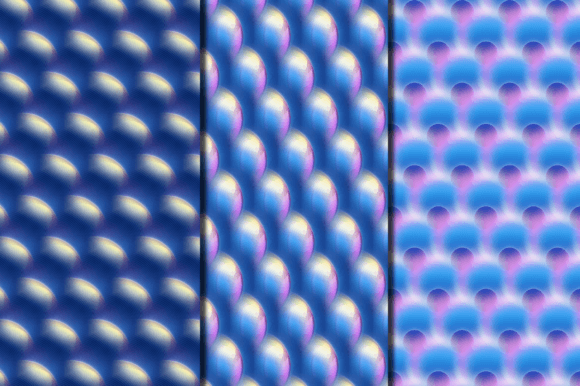
Mandala Patterns Beautiful Motif: A Versatile Design Resource for Creative Professionals and Educators
For centuries, mandalas have served as visual anchors—symbols of unity, balance, and intention across spiritual traditions, therapeutic practices, and artistic expression. Today, the Mandala Patterns Beautiful Motif bridges that timeless heritage with modern digital design needs. Unlike generic clipart or over-simplified vector assets, this curated collection offers a thoughtfully composed, scalable motif designed for clarity, adaptability, and aesthetic integrity. It’s not just decoration; it’s a functional design element rooted in symmetry, rhythm, and visual harmony—qualities that resonate deeply with both human perception and professional workflows.
Why This Motif Stands Apart in Digital Design Libraries
Many digital mandala resources suffer from one or more limitations: low-resolution raster files that pixelate when scaled, overly complex vectors that slow down editing, or stylistic choices that clash with contemporary branding. The Mandala Patterns Beautiful Motif avoids these pitfalls through intentional technical and aesthetic decisions. Each motif is built on a 1920px × 1280px canvas—a dimension optimized for high-fidelity screen display, print-ready scaling, and compatibility with standard design software interfaces. More importantly, the composition balances intricacy with legibility: fine linework remains crisp at small sizes, while negative space ensures readability even when layered over textured backgrounds or applied to packaging.
This isn’t a mass-produced template. Every curve, repetition, and radial alignment reflects deliberate proportioning—echoing principles found in sacred geometry without requiring symbolic interpretation. That neutrality makes it especially valuable for secular applications: a university psychology department might use it in mindfulness workshop handouts; a textile studio may integrate it into repeat patterns for sustainable fabric printing; an architectural visualization team could embed it subtly into presentation borders to evoke calm focus.
Education and Learning Environments
In classrooms—from early childhood centers to university seminar rooms—visual structure supports cognitive processing. Teachers report improved student engagement when lesson materials incorporate balanced, non-distracting motifs. The Mandala Patterns Beautiful Motif serves as a subtle yet effective anchor in slide decks, worksheets, and interactive whiteboard templates. Its symmetry aids spatial reasoning exercises; its radial layout models concepts like cyclical processes (water cycle, life stages, feedback loops) or hierarchical relationships (central concept radiating outward to supporting ideas). Because the motif arrives in editable vector formats, educators can isolate individual petals or rings to label parts, animate transitions, or convert sections into tactile cut-outs for kinesthetic learning.
Professional Branding and Marketing
Brands seeking authenticity and emotional resonance increasingly move away from sterile minimalism toward warmth, intention, and craftsmanship. A well-integrated mandala motif communicates care, completeness, and attention to detail—without overt spirituality. Consider a wellness startup launching a new meditation app: using the PNG or SVG version of the Mandala Patterns Beautiful Motif as a loading animation icon conveys pause and presence far more effectively than a spinning gear. Similarly, a boutique skincare line might layer the EPS file over product photography in Adobe Illustrator, adjusting stroke weight and color to match their palette—creating custom packaging borders or social media story frames that feel cohesive, not templated.
Creative Production and Maker Communities
Hobbyists, laser-cutters, embroidery designers, and Cricut users rely heavily on precise, production-ready files. Here, format diversity becomes critical—not as a marketing bullet point, but as a functional necessity. The inclusion of DXF ensures seamless import into CAD-based cutting software; SVG works natively in web-based design tools like Canva and Figma; AI and EPS retain full layering and path-editing capabilities for advanced customization in Adobe Creative Suite. One woodworker shared how they used the DXF file to etch the motif onto walnut coasters—scaling it precisely to fit a 4-inch diameter without distortion. Another educator repurposed the JPG version as a background for printable reflection journals, then overlaid student-written affirmations in contrasting typography—leveraging the motif’s visual stability to hold diverse textual elements together.
Technical Flexibility Meets Real-World Workflow Needs
The six included file types aren’t arbitrary—they map directly to common production pipelines:
- AI File: Full native Illustrator compatibility—ideal for designers who need to recolor, restructure, or integrate with existing brand assets using global swatches and appearance attributes.
- EPS File: Backward-compatible vector format trusted by commercial printers for large-format signage, foil stamping plates, or vinyl decals where legacy RIP (raster image processor) systems are still in use.
- SVG File: Lightweight, responsive, and web-native—perfect for animated loading screens, interactive infographics, or embedded icons in HTML emails that must render consistently across Outlook, Gmail, and Apple Mail.
- DXF File: Industry-standard for CNC routing, laser engraving, and plasma cutting—enabling precise physical reproduction whether you’re prototyping jewelry or fabricating exhibition panels.
- JPG File: High-quality raster option for quick mockups, presentations, or platforms that don’t support vector uploads—maintaining fidelity at standard screen resolutions.
- PNG File: Transparent background support allows effortless compositing over photos, gradients, or video—essential for social media creatives building branded Reels or TikTok overlays.
This range eliminates the friction of format conversion—no more tracing raster images, no more wrestling with incompatible paths, no more guessing whether a “vector” download is truly scalable. It respects the user’s time and technical context.
Design Integrity Without Compromise
A recurring challenge in digital asset libraries is the tension between versatility and uniqueness. Generic motifs risk blending into the background; highly stylized ones limit reuse. The Mandala Patterns Beautiful Motif occupies a deliberate middle ground: it’s distinctive enough to carry visual weight, yet neutral enough to adapt across contexts. Its line weight is consistent but not rigid—allowing subtle variation when stroked or filled. Its radial symmetry invites rotation and mirroring without visual dissonance. And because it was created with clean Bézier curves—not auto-traced scans—it responds predictably to transformations in any vector editor.
This integrity extends to color handling. While delivered in a harmonious default palette, the motif’s construction separates fill areas from outlines cleanly—making global color shifts trivial. A designer working on a dark-mode interface can invert all fills with one click; a researcher preparing a conference poster can desaturate the motif to 20% opacity for subtle background texture without losing structural clarity.
Supporting Ethical and Inclusive Creative Practice
Thoughtful design resources also consider usage ethics. These files are licensed for both personal and commercial use—no hidden restrictions on client projects, merchandise, or digital products. There’s no requirement to credit the creator, though attribution is always welcome. More significantly, the motif avoids cultural appropriation by focusing on universal geometric language rather than replicating culturally specific ceremonial symbols. It draws inspiration from symmetry principles found globally—in Islamic tilework, Celtic knotting, Indigenous basket patterns, and modernist art—without claiming authority over any single tradition.
This approach aligns with growing expectations around responsible design: educators can use it confidently in multicultural curricula; businesses can deploy it across international markets without localization concerns; creators can remix it into new expressions without ethical hesitation.
Getting Started Is Intentionally Simple
No installation, no subscription, no account creation. Upon purchase, users receive immediate access to all six files—organized clearly, named consistently, and ready for drag-and-drop use. There’s no learning curve tied to proprietary software or cloud dependencies. Whether you’re opening the SVG in a free browser-based tool or pasting the AI file into a multi-layered brand guideline document, the motif behaves as expected. That simplicity isn’t minimalism for its own sake—it’s respect for the user’s existing tools, timeline, and creative autonomy.
In practice, this means a graphic designer can drop the PNG into a client’s PowerPoint deck in under 30 seconds; a teacher can print the JPG as a classroom poster without adjusting DPI settings; a developer can embed the SVG directly into a React component with inline styling. The barrier between idea and implementation stays low—so energy stays focused on meaning, not mechanics.
Looking Beyond Decoration Toward Purposeful Integration
Ultimately, the value of the Mandala Patterns Beautiful Motif lies not in its visual appeal alone, but in how readily it supports deeper objectives: calming a chaotic interface, unifying disparate visual elements, guiding attention in educational material, or adding tactile nuance to digital experiences. It’s evidence that thoughtful design assets don’t need to shout to be useful—and that beauty, when grounded in function and flexibility, becomes a quiet but powerful enabler across disciplines.